
Iridium
satellite network
Coverage anywhere on Earth
N3D Data Science — Authorized Iridium Value-Added Reseller, Global Market

LEO Satellites
Near-Global Coverage
Weather Resilient
–1.4Mbps Data rate
Data Rate
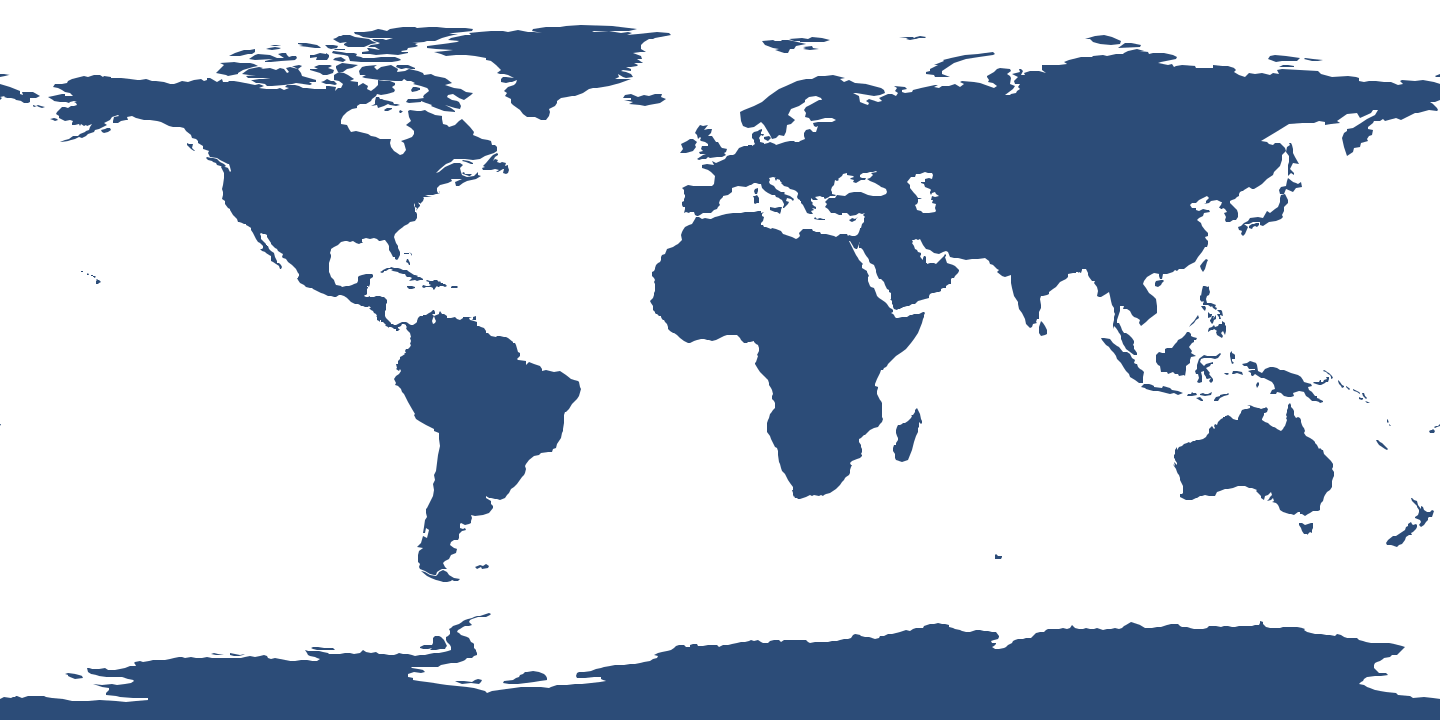
Live
- Satellites at operating altitude
- Spares in lower orbits
- Approximate coverage of one satellite
Calculated from public CelesTrak orbital data. For reference only; does not show actual service status.
66 satellites in low Earth orbit
Coverage that really is global
66 Active LEO Satellites · Pole-to-Pole Coverage
Iridium flies 66 satellites in polar low Earth orbit at roughly 780 km, reaching every part of the planet — the poles included. Each one carries inter-satellite links, so the constellation forms a communications mesh that stands on its own in space.
What Iridium can carry
From a handful of bytes to broadband, the Iridium portfolio covers the full range of what a remote application might need.
Short burst data
SBD is two-way satellite data built for IoT. Each message carries up to 340 bytes uplink and 270 bytes downlink, on modules small and frugal enough for battery-powered asset trackers and sensors.
Iridium Messaging Transport
IMT is the cloud-native successor for satellite messaging, carrying up to100 KB per transmission over Iridium Certus — enough headroom to integrate IoT solutions the way you want to.
Iridium Certus broadband
Iridium’s broadband platform comes in tiers: Certus 100 at 88 Kbps suits SCADA, Certus 350 runs at 352 Kbps, and Certus 700 reaches roughly 1.4 Mbps — enough for maritime, aviation and enterprise work.
Satellite voice
Place and take calls from anywhere on Earth — the poles, the middle of an ocean, deep in the mountains. When terrestrial infrastructure has failed completely, the call still goes through.
Satellite PTT radio
Push-to-talk carried over satellite, so teams spread across a region can hold one live group conversation with nothing on the ground to depend on. Built for search and rescue, defence and field operations.
Inter-satellite links
Every satellite links to as many as four neighbours, weaving the constellation into a three-dimensional mesh. Traffic hops between satellites without ever touching a ground gateway, which is what makes the network so hard to knock out.
Positioning, navigation and timing
Iridium STL backs up and complements GPS/GNSS. Its signal arrives about1,000× stronger than GPS, which is why it still works indoors and in urban canyons where GPS gives up.
Why L-band matters in a disaster
L-Band Advantages for Disaster & Emergency Response
When everything on the ground has gone down, an L-band satellite link is the lifeline you can still count on.
Iridium keeps working when terrestrial networks do not
Earthquakes, typhoons and floods take out telecom infrastructure first. Iridium needs nothing on the ground locally, which routinely makes it the only communication that still works at the scene.
When terrestrial infrastructure collapses after earthquakes, typhoons or floods — Iridium keeps working. No local ground infrastructure needed.
L-band shrugs off weather
L-Band Weather Resilience
At 1–2 GHz, L-band is largely untroubled by rain fade, cloud and thunderstorms — the conditions that degrade Ka and Ku band badly.
No dead zones
True Global Coverage
Mountains, jungle, open ocean, polar ice — if the antenna can see sky, the link comes up. It covers everywhere a phone cannot.
Ready in seconds
Rapid Deployment
Handsets, PTT radios and portable terminals need no base station and no install. Switch on and talk — which is what the first hour after a disaster demands.
One network, every mode
Multi-Modal Communications
Voice, push-to-talk, SMS, data and IoT sensor reporting all ride the same network, so one system covers everything the site needs.
Built to survive
Resilient Architecture
If a ground gateway goes down, the inter-satellite mesh simply routes around it and traffic keeps flowing.
Position built in
GPS + Tracking Integration
With GPS on board, the position of rescuers and casualties comes back live, so command can commit resources precisely and lose less time.
How the Iridium
network actually works
A closer look at the constellation, the services it carries, and how N3D builds global solutions on top of it.
N3D is an authorised Iridium reseller
for the global market
N3D Data Science Ltd. is an Authorized Iridium Value-Added Reseller with a global market authorisation. We deliver the whole Iridium portfolio — SBD, Certus, satellite voice, PTT radio and IMT.
🔗 Verified on iridium.com/find-partner/n3d-data-science-ltd
FAQ
Is N3D an Iridium partner in Taiwan?
Yes. N3D Data Science is an authorized Iridium Value-Added Reseller (VAR) working directly with Iridium, with authorization covering the global market. Companies, government agencies and individuals in Taiwan can buy Iridium devices and activate Iridium services directly through N3D.
What kinds of Iridium partners are there?
According to Iridium, partners are Service Providers (SP), Value-Added Resellers (VAR), Value-Added Manufacturers (VAM), Value-Added Developers (VAD), and Dealers, who sell through SPs and VARs. N3D is a VAR working directly with Iridium.
What does N3D offer?
SBD data, IMT (Iridium Certus 9704), Certus broadband, satellite telephony, Iridium PTT and PNT timing, plus the SBD CC and IMT CC integration platforms built on Iridium CloudConnect. N3D also supplies Iridium modules, developer kits and terminals; see hardware.
How do I contact N3D?
Use the contact form or email info@n3d.ai.